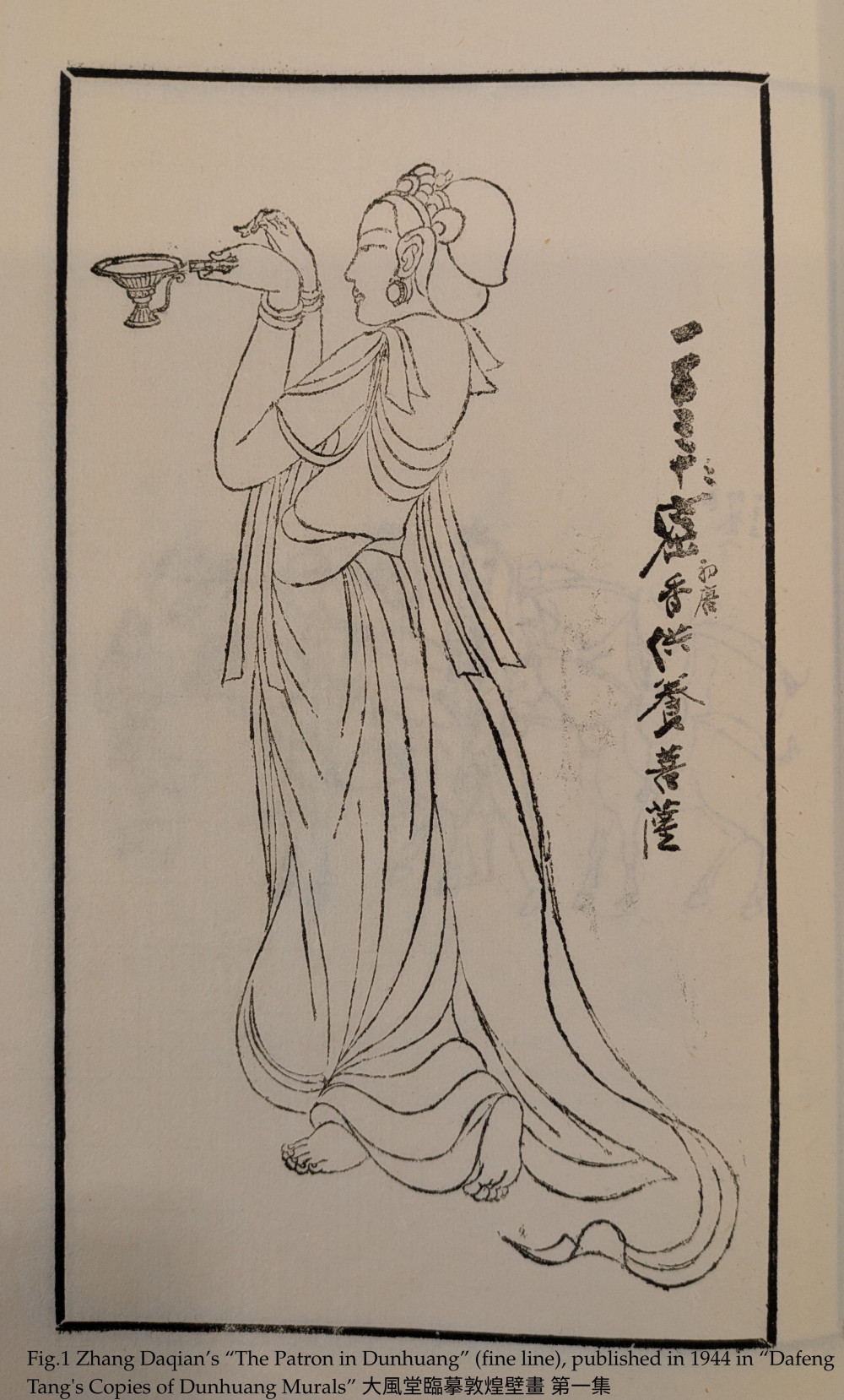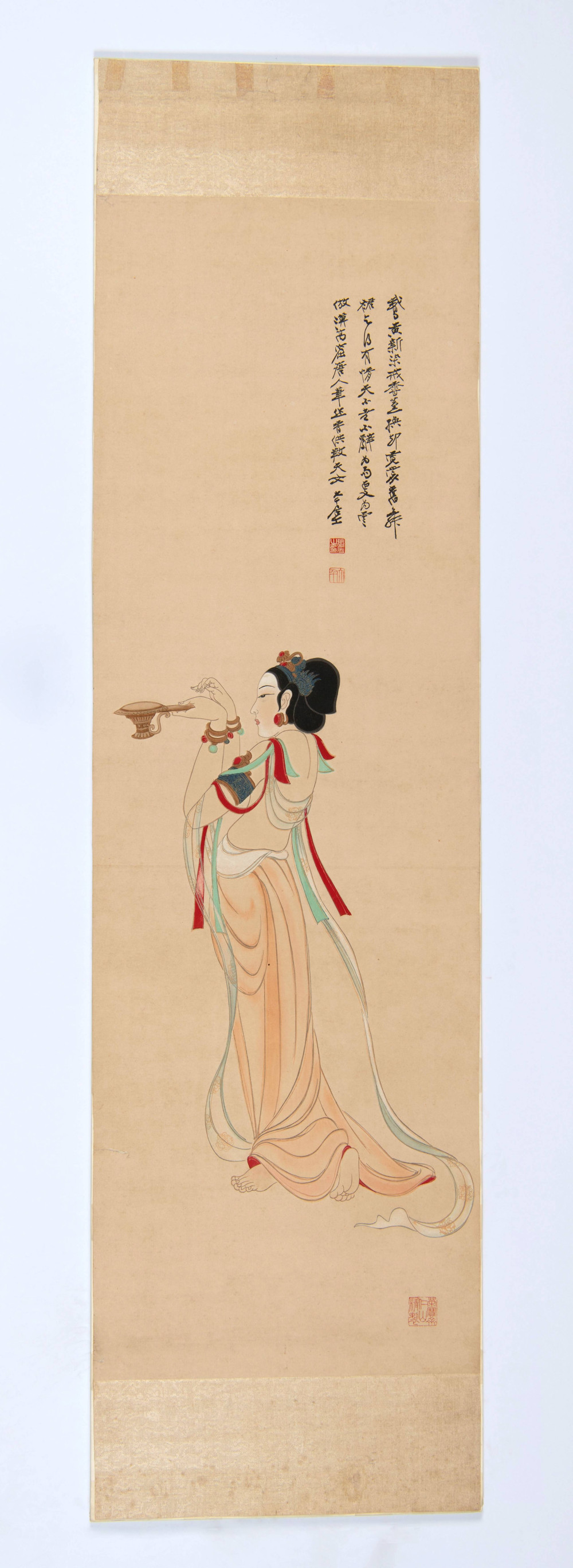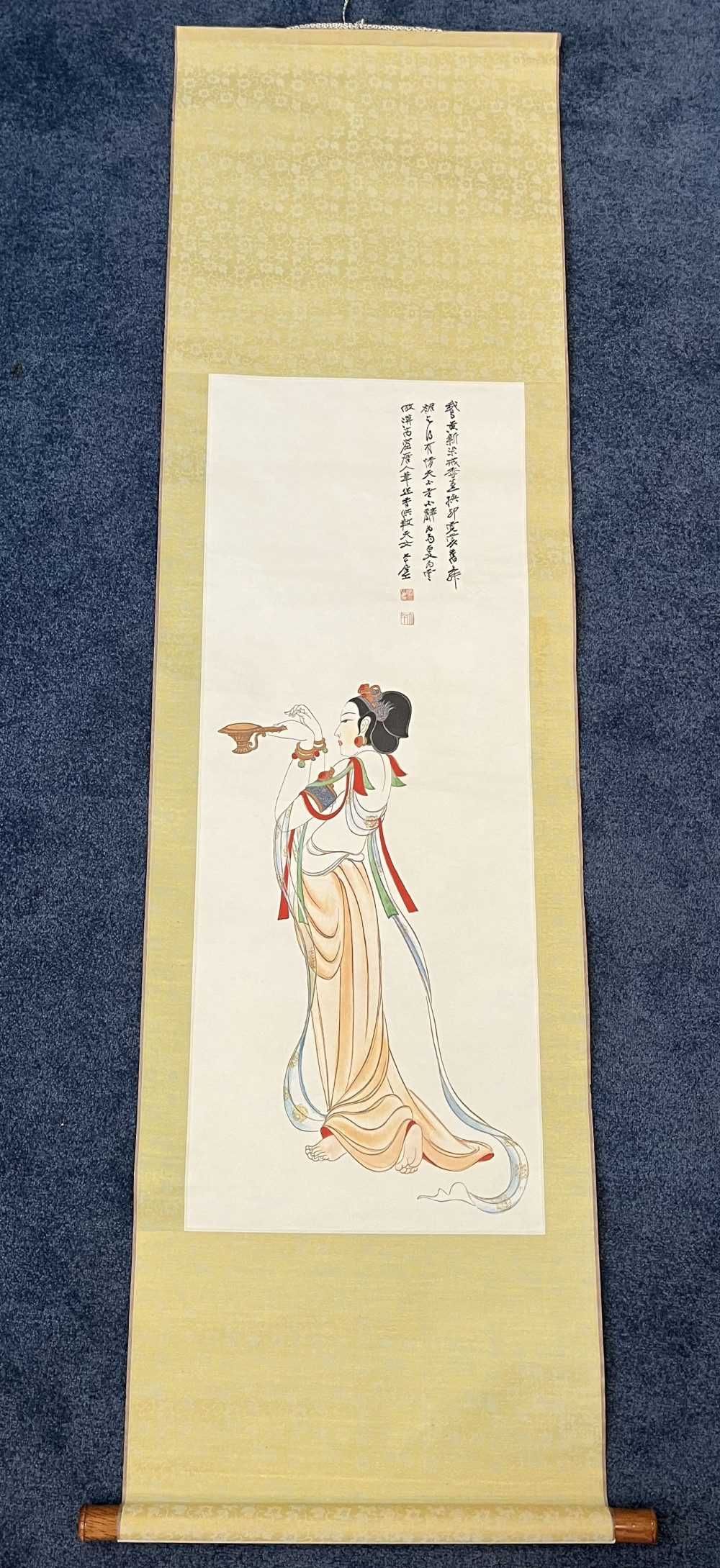

Between 1941 and 1943, Zhang Daqian 張大千 (1899–1983), arguably China’s most famous artist of the 20th century, travelled with his students to Dunhuang, an oasis on the edge of the Gobi Desert known for its Mogao grottoes with Buddhist murals painted between the 4th – 14th century. They copied hundreds of murals onto paper, motivated as much by Zhang's own artistic study as by the wish to share this centuries-old Chinese cultural heritage with a wider public.
One of these copies was the so-called “The Dunhuang Tribute Bearer” 敦煌供養人. A fine-line drawing of this work was published in 1944 in Zhang’s Dafeng Tang's Copies of Dunhuang Murals 大風堂臨摹敦煌壁畫 Zhang later reworked the drawing as an ink-and-color painting on paper. This painting provides a fascinating example of how one image has been reproduced and mobilized across different times and for divergent political objectives amid geopolitical Cold War tensions.