Dunhuang Tribute Bearer

How can a single image become a political tool? Originally painted during the Tang dynasty (618–907) as a mural in the Dunhuang caves of northwest China, “The Dunhuang Tribute Bearer” has taken on an extraordinary afterlife. At first glance, it appears to be simply a beautiful depiction of a female figure making a Buddhist offering. Yet since the 1940s, this mural has been reproduced time and again, becoming not only a work of art but also a tool of cultural diplomacy and political persuasion.
An Image in Motion
Between 1941 and 1943, Zhang Daqian 張大千 (1899–1983), arguably China’s most famous artist of the 20th century, travelled with his students to Dunhuang. They copied hundreds of murals onto paper, motivated as much by Zhang's own artistic study as by the wish to share this centuries-old Chinese cultural heritage with a wider public.
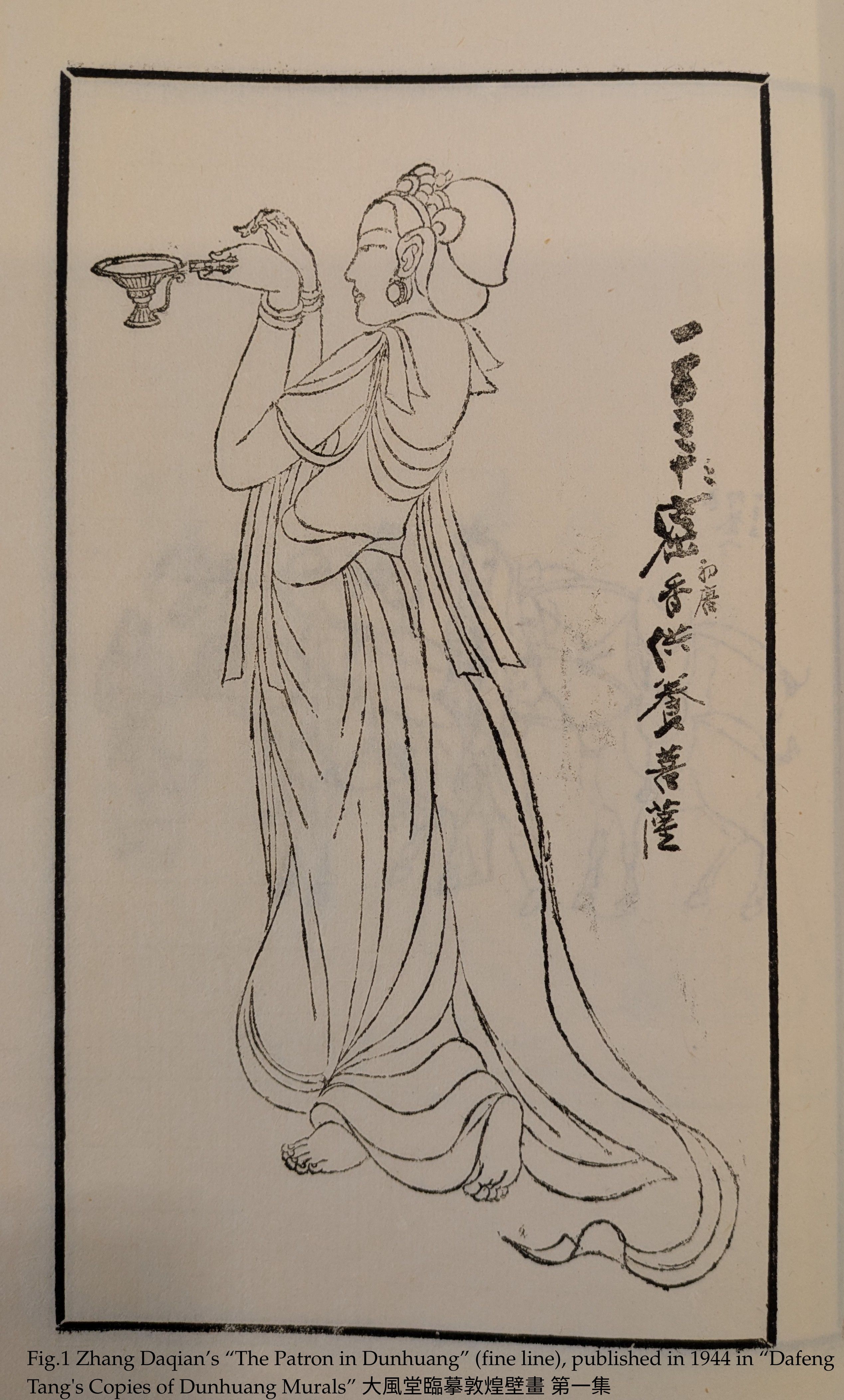
One of these copies was the so-called “The Dunhuang Tribute Bearer” 敦煌供養人. A fine-line drawing of this work was published in 1944 in Zhang’s Dafeng Tang's Copies of Dunhuang Murals 大風堂臨摹敦煌壁畫 Zhang later reworked the drawing as an ink-and-color painting on paper.
Rongbaozhai: The Art of Woodblock Printing
The colored version of “The Dunhuang Tribute Bearer” was first reproduced as a full-sized mubanshuiyinhua (water-based woodblock print) in 1945 by Beijing’s Rongbaozhai 榮寶齋 (est. 1672), a stationery and woodblock print studio with which Zhang Daqian had a close relationship.
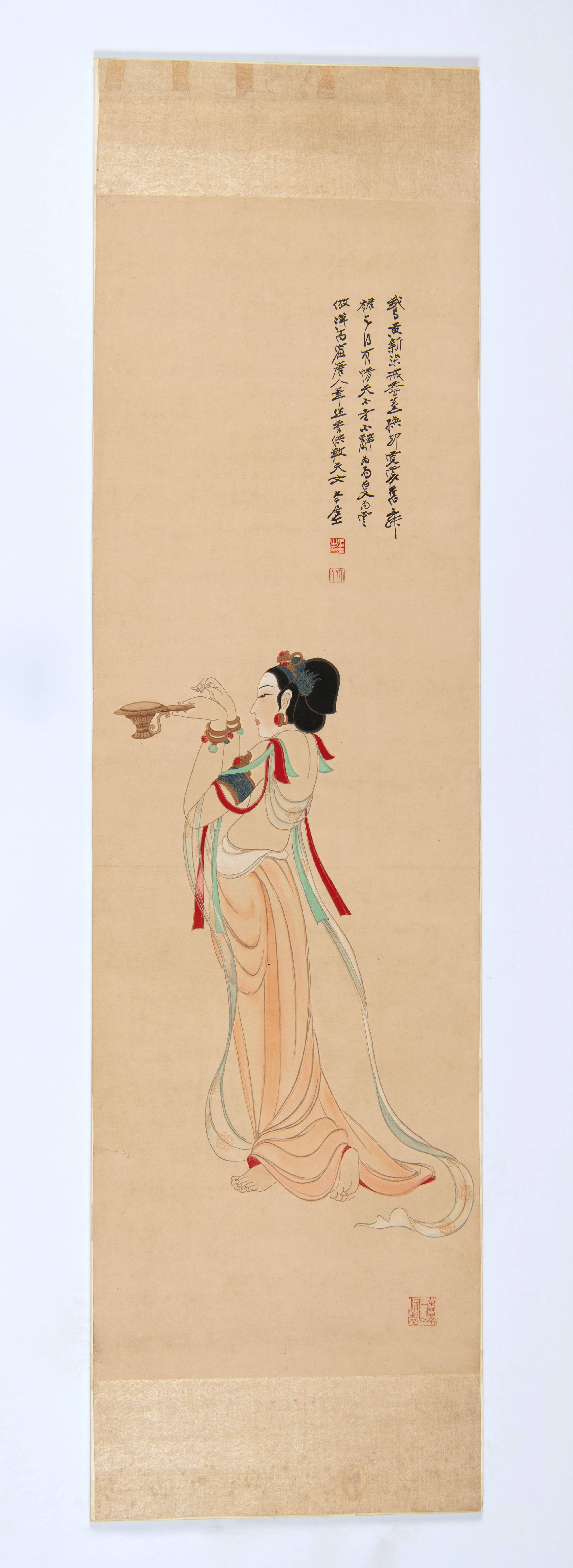
This painting provides a fascinating example of how one image has been reproduced and mobilized across different times and for divergent political objectives amid geopolitical Cold War tensions. Find out more in the full story.