
Permanent exhibition

The Japan collection forms the cornerstone of this museum. Thanks to the acquisition of collections belonging to figures such as the physician and scientist P. F. von Siebold, the museum now possesses an extensive Japan Collection. What makes this collection unique is that it provides a comprehensive picture of Japanese society at the start of the nineteenth century.
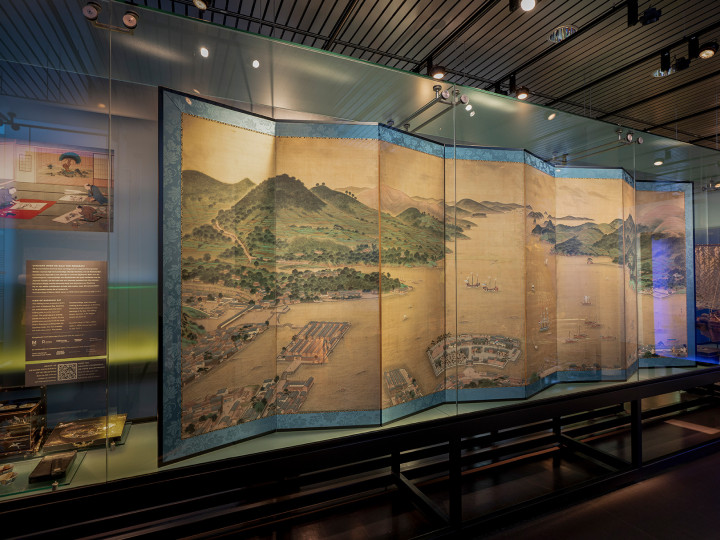
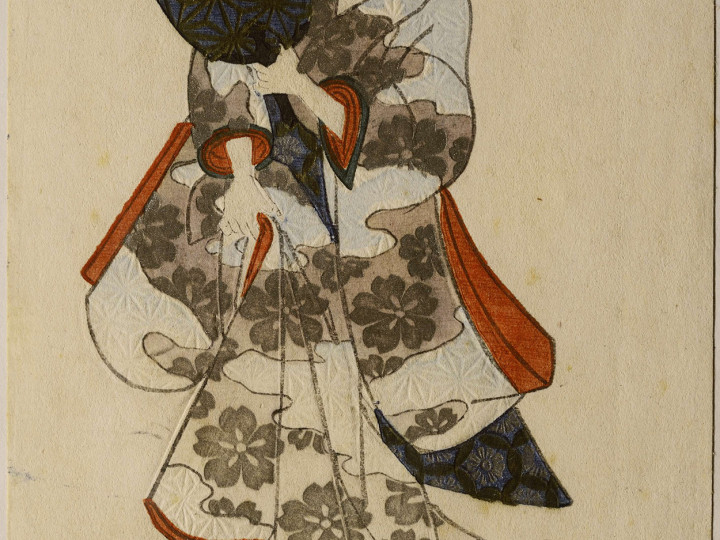
In this expo you will find everyday objects, such as tools, fine lacquerware, folding screens and prints. There is also a large model of the island of Deshima, from where the Dutch traded with Japan. Pipes from Gouda and shards of pottery show that Dutch traders not only traded, but also brought their own customs with them to Japan. When displaying objects, attention is paid to the way in which they are presented in their country of origin. For example, the Japanese samurai sword is displayed without its handle (tsuka), so that attention is focused entirely on the metal blade (kling). The kling is, in fact, the most important part of the sword, in which the craftsmanship of the maker is evident.
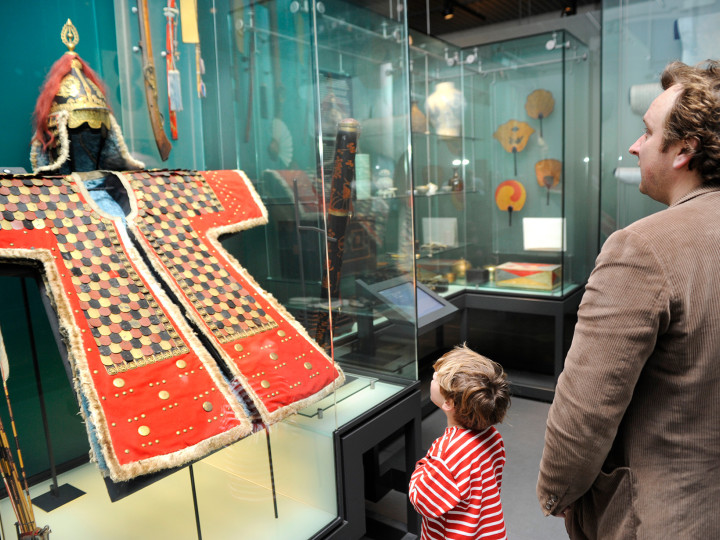
One of the most striking highlights in this exhibition is the Korean officer’s coat with helmet. Only a few examples are known to exist worldwide, and this is possibly the best-preserved one. The uniform dates from the late nineteenth century, when Korea modernised its army along Western lines. The combination of bright red wool, blue silk and metal scales gives the ensemble a rich and striking appearance.
Another remarkable object is the folding screen by Kawahara Keiga. This screen depicts Nagasaki Bay and the Dutch trading post of Deshima. It offers a unique insight into the contacts between Japan and the Netherlands in the nineteenth century.
Would you like to know more about this remarkable folding screen? Discover the story behind the screen with the Deshima Experience, either at the museum or at home. You can also read more about the research and restoration of the screen via the blog about the Keiga folding screen.
Curious about the rest of the collection? Discover it at the Wereldmuseum Leiden or visit the online collection.