header waka

Two Remarkable Waka

A Living Tradition in Leiden

In the museum garden of Wereldmuseum Leiden are two remarkable Māori waka: Te Hono ki Aotearoa and Tāhimana. These traditional canoes tell a story of connection, cultural heritage, and collaboration between Māori communities in Aotearoa New Zealand and Leiden. Discover how the waka came to Leiden, the collaborations that have grown from them, and how they continue to be used today.

A network of collaborations

In 2010, inspired by the exhibition Te Mana Māori, the idea emerged to bring a Māori waka to Leiden. Wereldmuseum Leiden, then known as Museum Volkenkunde, wanted to create a lasting connection with Aotearoa New Zealand and Māori communities.

From the very beginning, it was clear that a waka could not simply be preserved as a museum object. Within Māori culture, waka hold profound meaning: they are connected to ancestry, community, knowledge, tradition, and spiritual values. Therefore, agreements were made about the care of the waka, its use, and the respectful observance of Māori protocols.

An important condition was the establishment of a dedicated crew in Leiden. For this purpose, the Royal Student Rowing Association Njord was approached. This led to a collaboration between Māori communities, Wereldmuseum Leiden, and Njord’s Waka Crew.
The Waka Crew

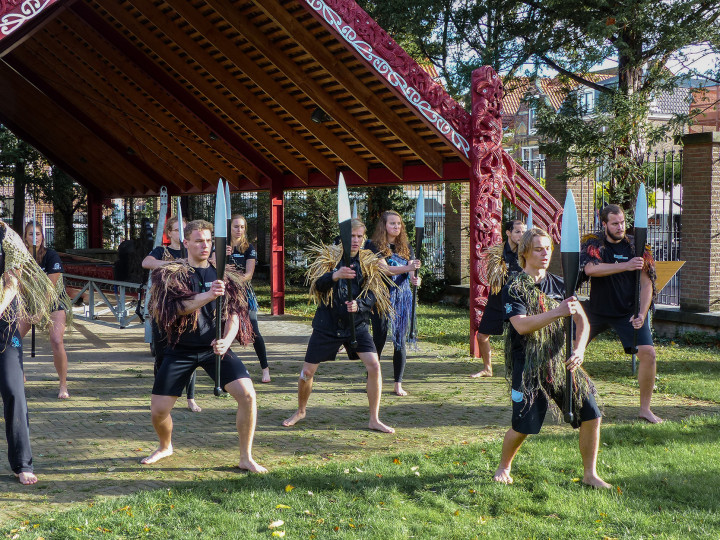
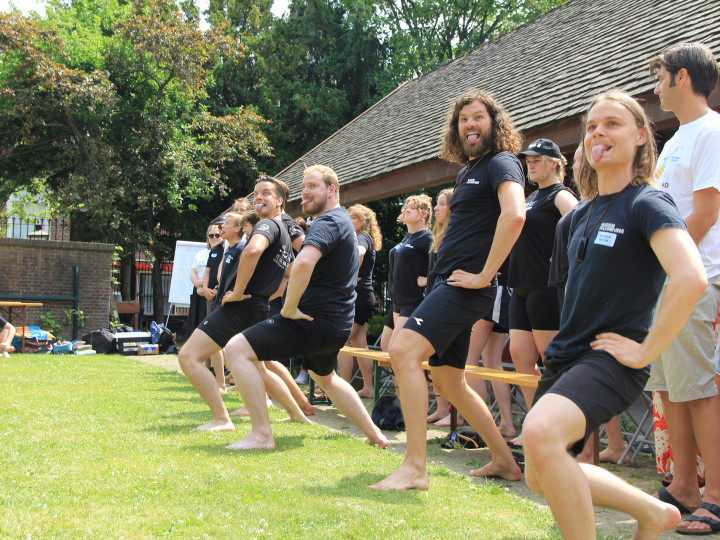
The Waka Crew of K.S.R.V. “Njord” is the Leiden-based crew responsible for the Māori waka of Wereldmuseum Leiden. The group consists of student volunteers and rowers who are committed to preserving, using, and raising awareness of the waka.

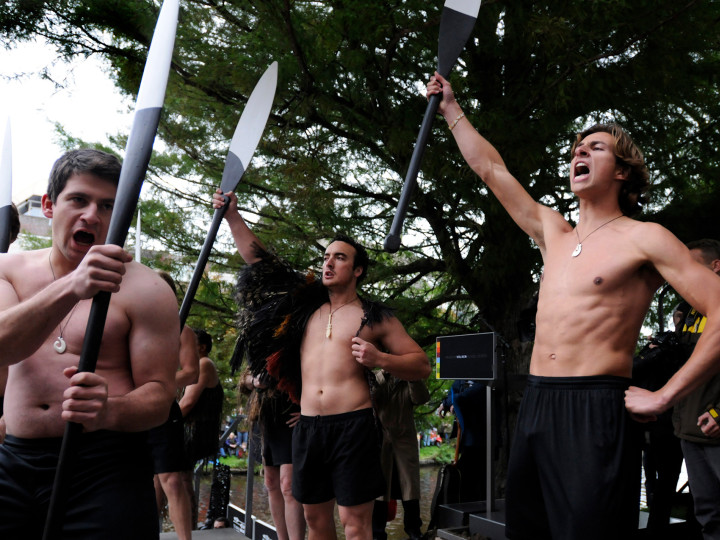
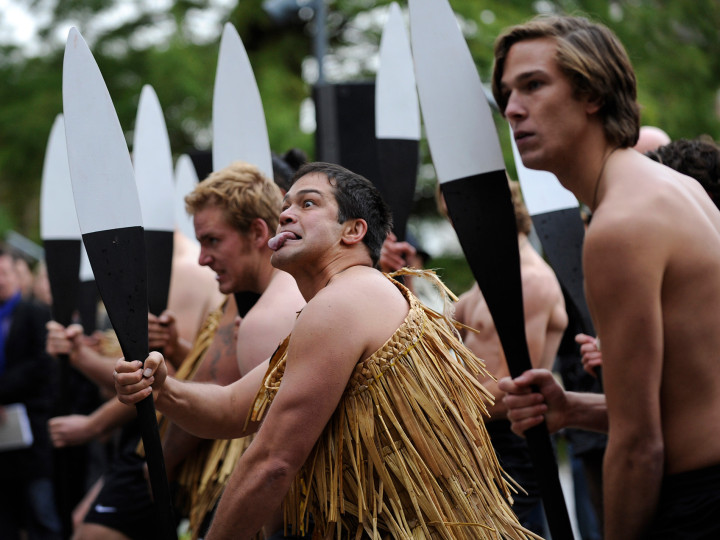
The members are kaihoe, paddlers who learn how to navigate a waka together as a crew. They are also involved in training sessions, voyages, ceremonies, and cultural activities connected to the waka.

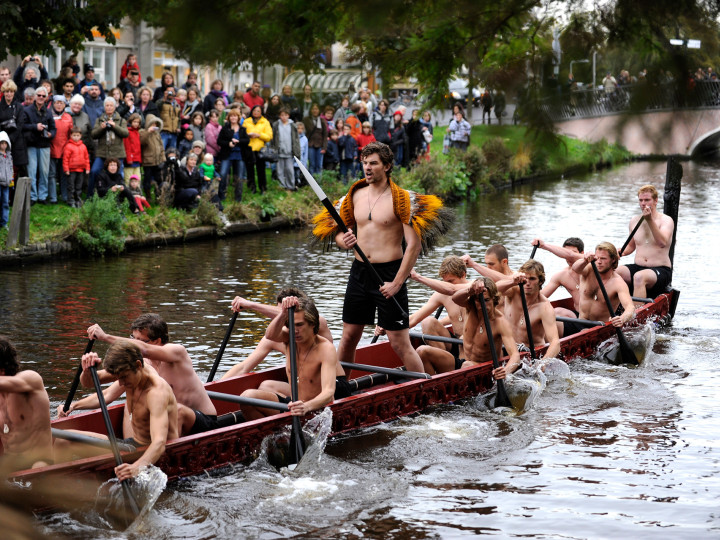
Within the crew, there are also ceremonial roles. The kaihautū sets the rhythm on the waka and guides the paddlers. The kaikarakia leads karakia: ritual words or prayers that may be spoken during important moments. In this way, the crew does not only deepen its knowledge of paddling, but also of the values and rituals associated with the waka.

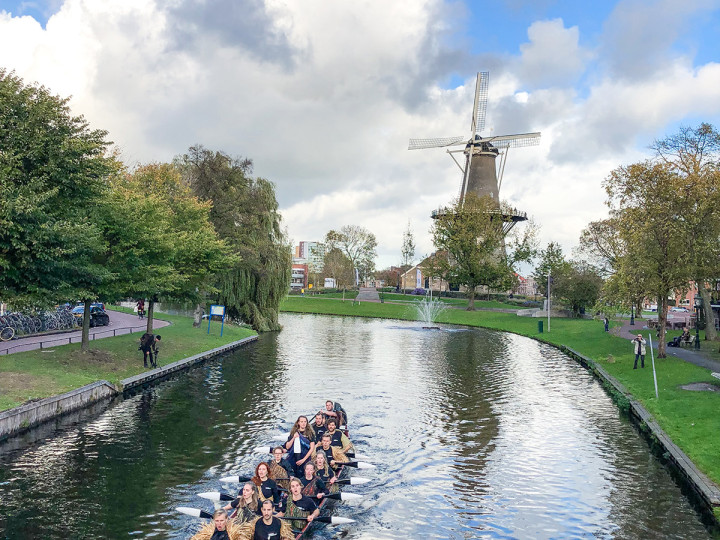
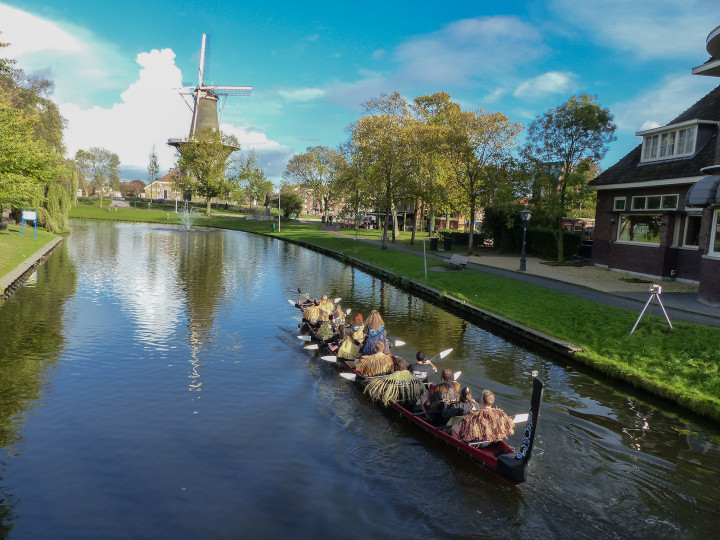
During spring and summer, members of the Waka Crew can regularly be seen in Tāhimana as they paddle through the canals of Leiden.

What is a Waka?

A waka is a traditional Māori canoe: a long, narrow vessel that holds a much deeper meaning within Māori culture than simply being a boat. Waka are connected to journeys, ancestry, community, and identity. According to many Māori traditions, the ancestors of Māori arrived in Aotearoa New Zealand in different waka. Many communities still know the waka with which their ancestors are connected.

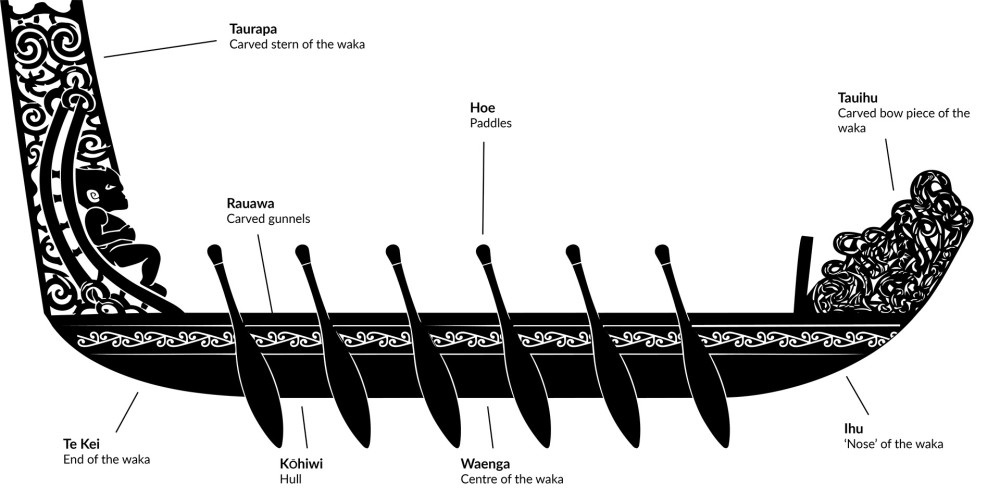
Waka are generally long and narrow in shape. A waka consists of several parts, including Te Ihu, the front, Waenga, the middle section, and Te Kei, the stern. The front and back may feature intricate carvings that refer to ancestors, stories, and spiritual meanings.

There are different types of waka. Some are intended for everyday use or transport, while others have a ceremonial purpose. The waka in Leiden are approximately fourteen metres long. Te Hono ki Aotearoa can accommodate around fourteen paddlers, while Tāhimana is wider and provides space for approximately twenty paddlers.

Ontvangst in Leiden

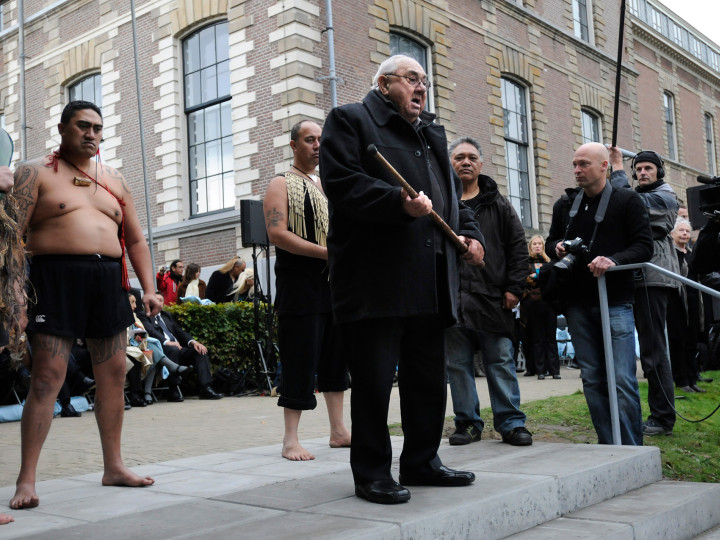
Op 18 oktober 2010 werden twee waka’s toevertrouwd aan Wereldmuseum Leiden en aan K.S.R.V. “Njord”. Het ging om twee verschillende kano's: een ceremoniële waka tau, de Te Hono ki Aotearoa  en een waka die gebruikt kan worden voor trainingen en vaartochten, de Tāhimana

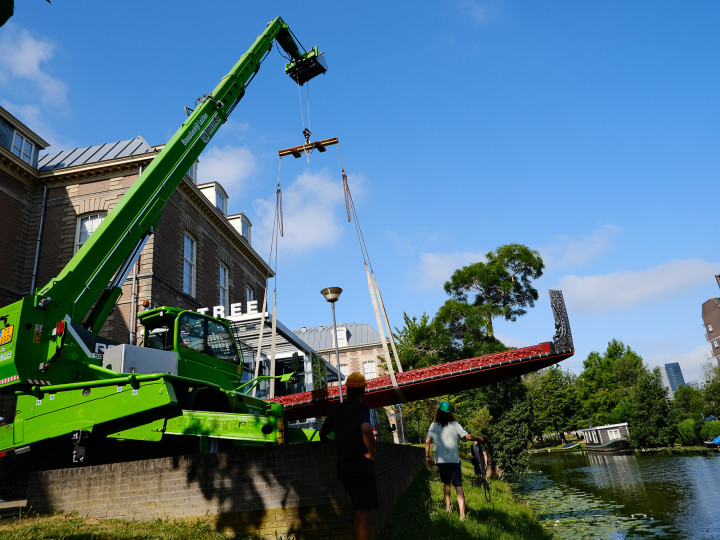
Dat was bijzonder: voor het eerst kwam een Māori-waka buiten Aotearoa Nieuw-Zeeland terecht die ook door niet-Māori mocht worden bevaren. Tijdens de overdracht kwamen Māori-gasten, museummedewerkers en leden van Njord samen. Zo begon een samenwerking die de waka-traditie in Leiden zichtbaar en levend houdt. 

The Origins of Te Hono and Tāhimana

The two waka in the museum garden of Wereldmuseum Leiden are Te Hono ki Aotearoa and Tāhimana. Each has its own function and significance.

Te Hono ki Aotearoa means “the connection with Aotearoa New Zealand.” This ceremonial waka taua is carved from a single piece of kauri wood and weighs approximately 1,000 kilograms. Kauri trees grow in the north of New Zealand and hold a special, tapu (sacred) significance within Māori culture. The carving was led by master carver Heke-nuku-mai-ngā-iwi Puhipi, also known as Sir Hector Busby.

Tāhimana is made of fibreglass and is intended to allow the waka tradition to be actively practised. This waka is lighter and suitable for training sessions and voyages on the canals of Leiden.

The Use of the Waka

Waka can have different functions, and the two waka in Leiden each have their own role.

Te Hono ki Aotearoa has a ceremonial significance and is only launched on special occasions. Because of the waka’s materials, cultural value, and meaning, it is treated with great care and respect.

Tāhimana was made for regular use. During spring and summer, this waka is often on the water beside the museum. The Waka Crew of Njord uses Tāhimana for training sessions, voyages, and cultural activities on the canals of Leiden. This waka has been adapted to the Dutch environment: Tāhimana has a fold-down taurapa, the raised stern section, allowing the crew to pass beneath low bridges.

In this way, the waka in Leiden are more than remarkable vessels: they demonstrate how knowledge, culture, and traditions can be shared in a respectful way, with attention to their origins and to the people who continue this tradition today.

In this video, you can see how the collaboration between Wereldmuseum Leiden and Māori carvers came about.

Contribute to the waka tradition:

Waka

Support the Waka volunteers

The Waka Support Foundation (WSF) supports the volunteer group providing traditional Māori canoes in the

Link