
On now until 3 January 2027

In ‘Darwin in Paradise Camp’, Wereldmuseum Leiden presents the Dutch solo debut of the internationally acclaimed artist Yuki Kihara. In this visually spectacular exhibition, Kihara rewrites the Western narrative on nature, gender and identity through humour, beauty and critical inquiry. From a queer and indigenous perspective, she re-examines the legacy of artists and scientists who have shaped our view of the world. Through photography, video and installations, the exhibition invites visitors to look differently at history, imagery and the diversity of humanity and nature.
With Darwin in Paradise Camp, Yuki Kihara presents a powerful and playful reinterpretation of the Western worldview. In her work, she explores how colonial art and science have shaped our ideas about nature, culture and identity. Kihara sheds new light on these narratives by examining them from an Indigenous and queer perspective.
The exhibition focuses on two influential figures from Western history: artist Paul Gauguin and biologist Charles Darwin. Their work played a significant role in shaping Europe’s view of the Pacific, its nature and its inhabitants. At the same time, these images were often coloured by colonial notions and exoticisation.
Kihara explores how these perspectives emerged and how they continue to shape our perceptions.
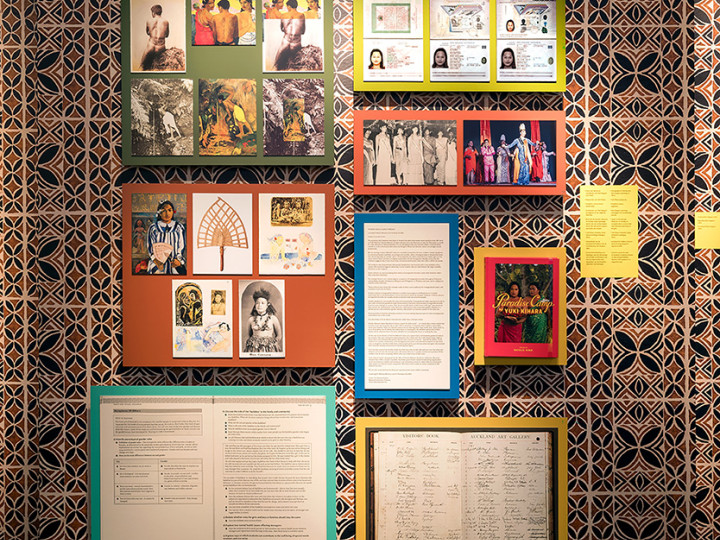
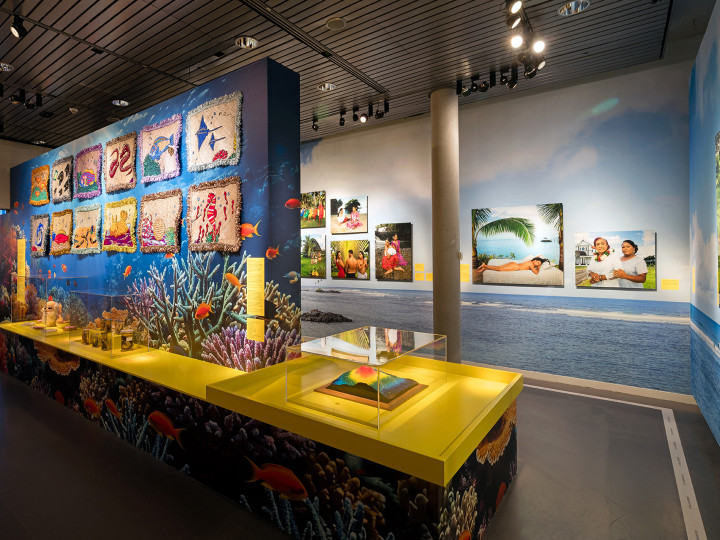
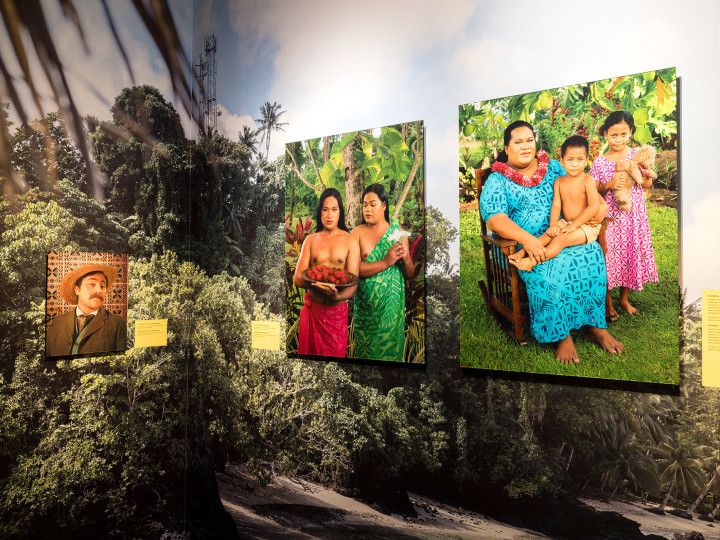
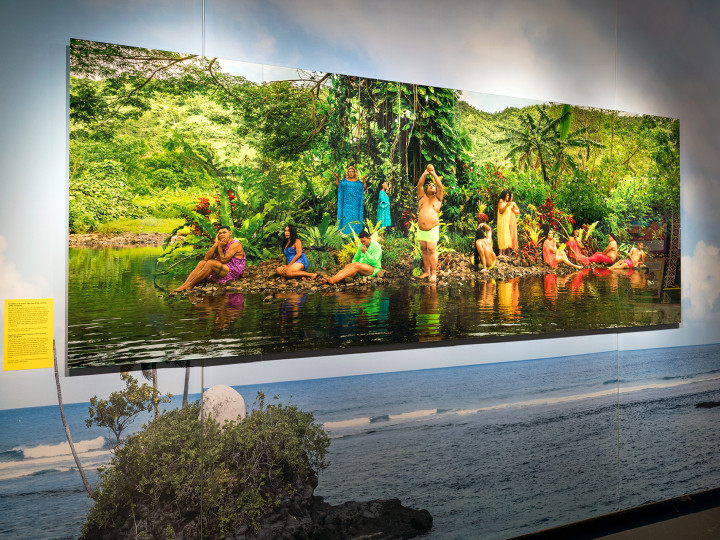
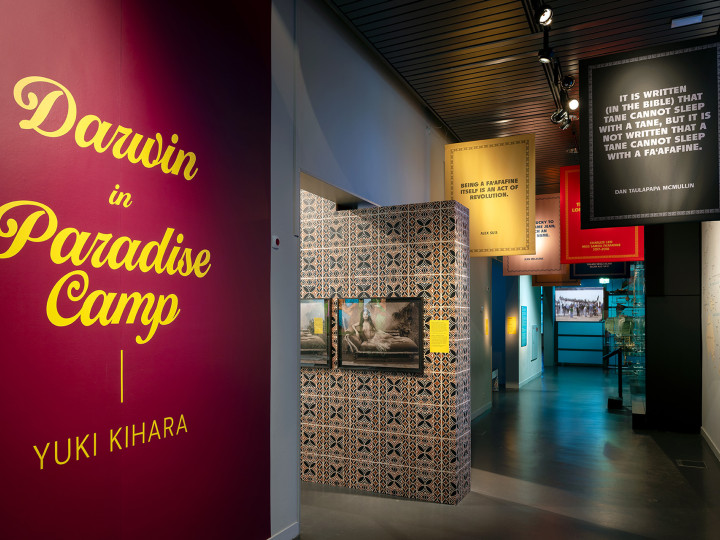
The exhibition combines photography, video and archival material. Central to the exhibition is a series of photographic works in which members of Kihara’s own fa’afafine community – a traditional third gender identity in Samoa – strike poses that reference famous paintings by Gauguin. By re-enacting these iconic images, Kihara questions the way in which indigenous people have been depicted in art history.
Another striking element is a video in which the artist herself steps into the shoes of Charles Darwin. With humour and theatrical elements, she raises questions about scientific assumptions and hidden narratives. Recent research suggests that Darwin may not have published his observations on non-heteronormative behaviour in animals in full. Kihara uses this discovery as a starting point for a playful yet incisive reflection on science and gender.
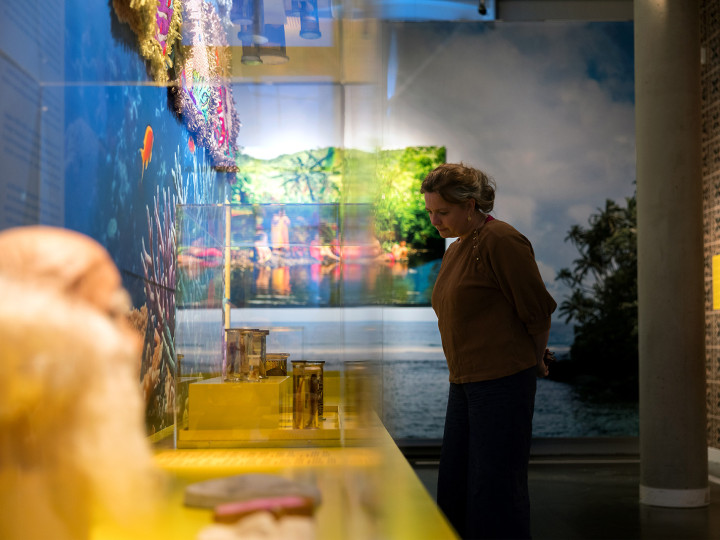
The exhibition is designed as a rich visual experience. Large photographic prints, projections, videos and objects fill the space and draw visitors into Kihara’s world. Historical sources and contemporary artworks stand side by side, creating a dialogue between past and present.
This combination of art, research and storytelling results in an exhibition that is both critical and accessible. So come and look, listen, learn and sometimes laugh – exactly as Kihara intended.
“(In) the expansive world of the Japanese-Sāmoan artist (Yuki Kihara) …a reconsideration of what it means to be human requires a reevaluation of the origin of the species.”
Art Review, April 2025. Read the full article here.
For Yuki Kihara, the history of colonisation is not a closed chapter. Its consequences are still visible, both in the way we view other cultures and in the relationship between humans and nature. Through her work, she invites visitors to recognise this legacy and to rethink it.
At the same time, the exhibition demonstrates the importance of diverse perspectives. By giving space to Indigenous and queer voices, Darwin in Paradise Camp opens up new ways of understanding history, science and art.
The result is an exhibition that not only surprises and inspires, but also invites conversation about the world we live in – and the future we wish to shape together.

