Read more about what you can see below. Keep this webpage open on your mobile for the background information, while you can admire the large images on location!

Soon you will find a temporary outdoor exhibition near the cherry trees, featuring photographs of objects from the collection. The outdoor exhibition can be visited free of charge. Some of the original objects shown on the posters can be admired in the Japan & Korea gallery.
Read more about what you can see below. Keep this webpage open on your mobile for the background information, while you can admire the large images on location!
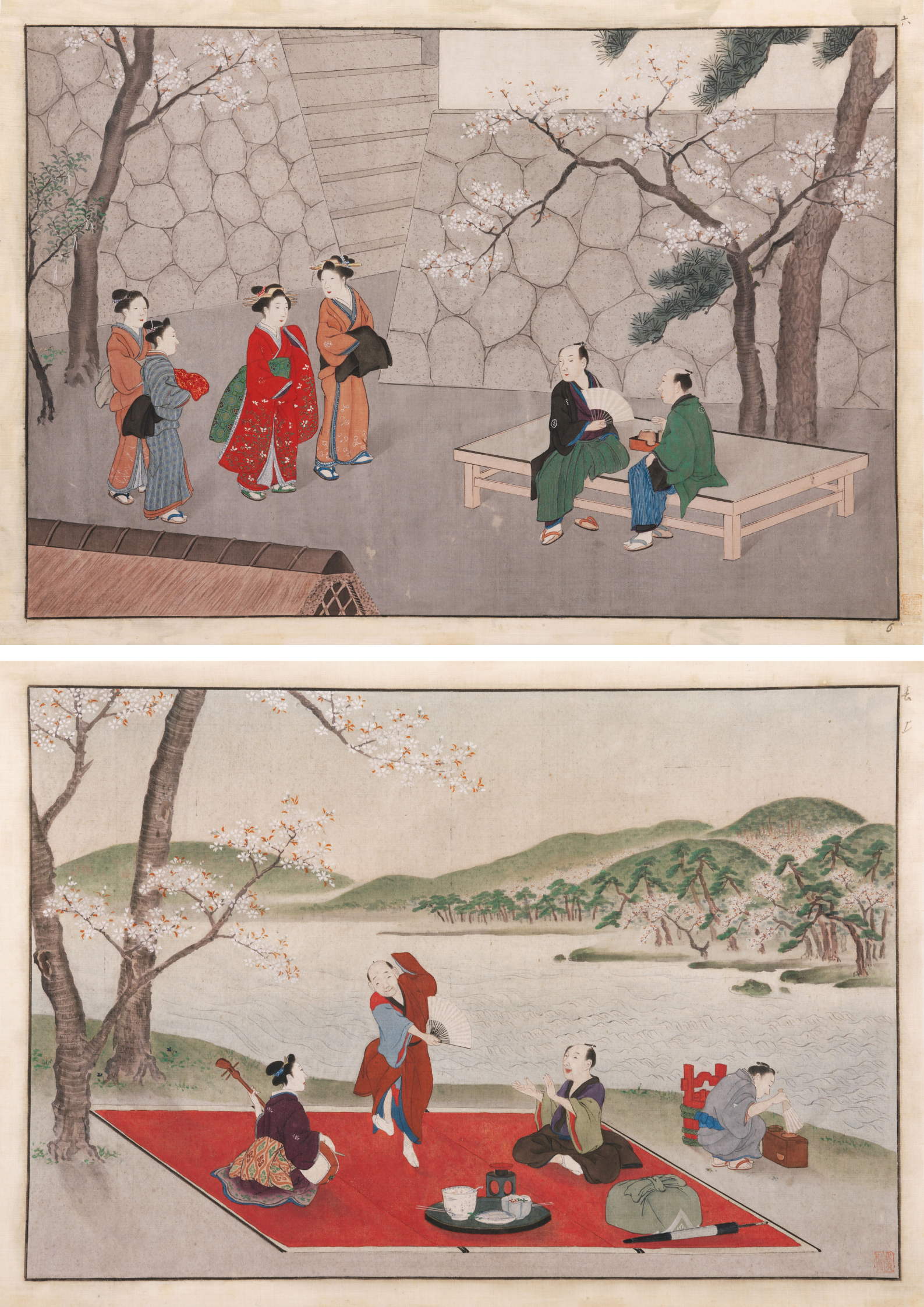
Meeting and dancing under the cherry blossoms
The upper painting shows two potential marriage partners meeting for the first time. The young man is sitting next to the marriage broker under the blossoming cherry tree, while the proposed bride and her entourage approach from the left.
In the lower painting, hanami is in full swing: with a geisha playing music on the left, and in the middle a man performing a fan dance to the music.
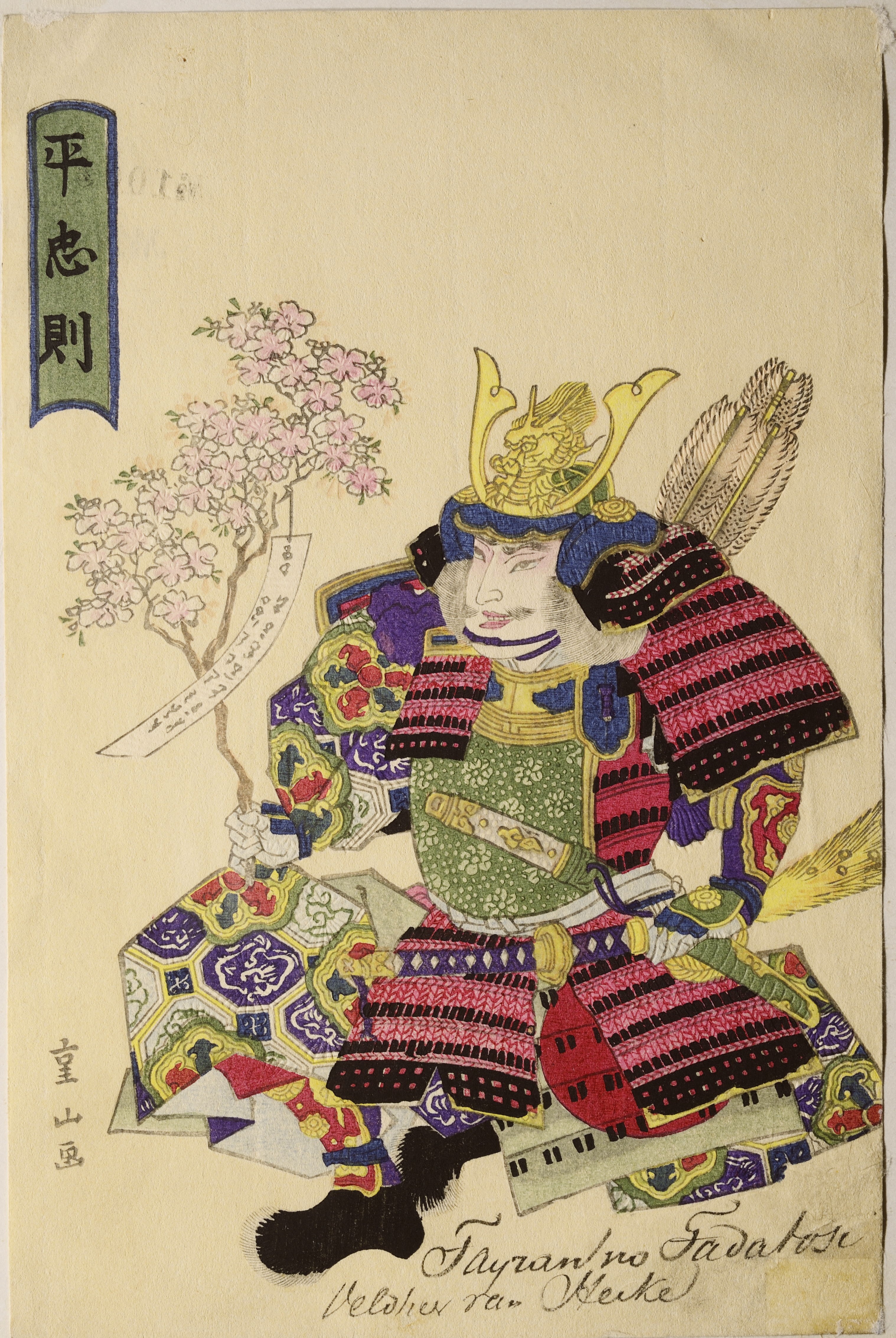
The warlord Taira no Tadanori
Tadanori (?-1184) was not only a skilled military leader but also an avid poet. His best-known poem is about sleeping under a cherry tree, while its blossoms watch over him like an innkeeper. Tadanori died in battle and the enemy recognised him by the poem he carried on his body.
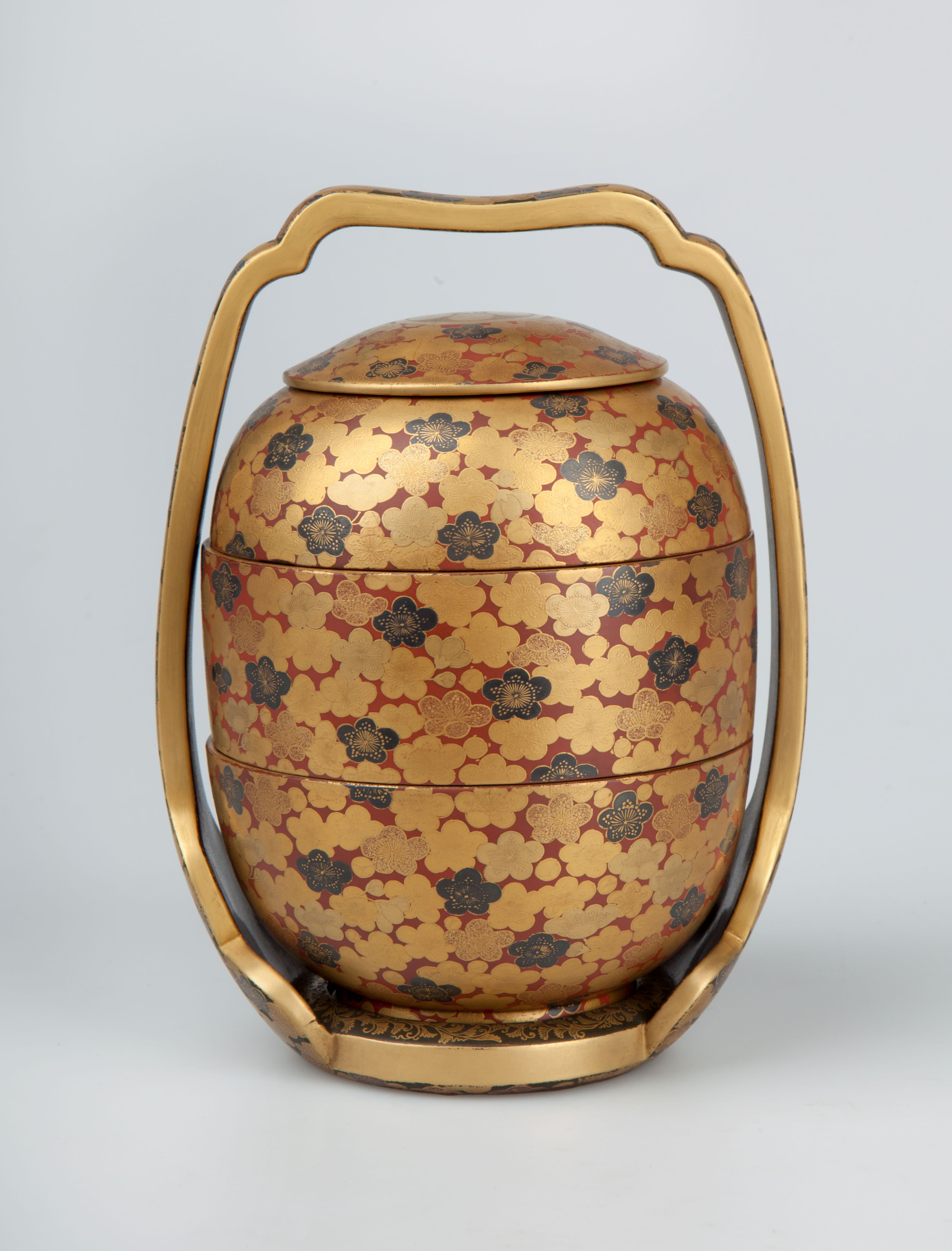
Portable stacked trays with plum blossoms
This luxury lacquerware set is decorated with plum blossoms. Plum trees bloom earlier than cherry trees, just after the snow has melted. The two can be distinguished by the shape of their petals. Cherry blossoms have a split at each petal tip. Plum blossom petals have rounded tips, as on this object.
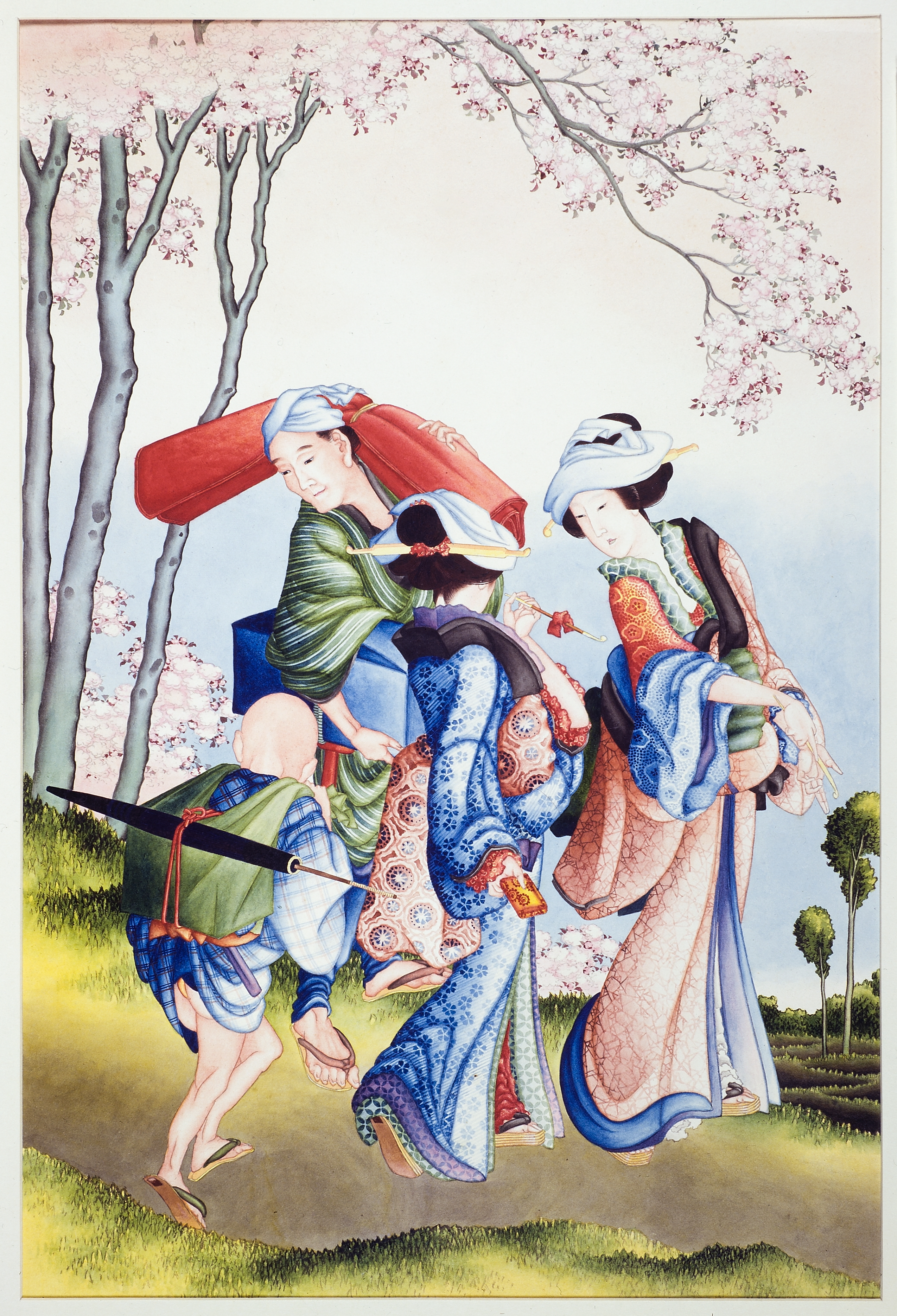
On the way to hanami picnic
This party has come prepared, with nice clothes, packages with food and drink, and a rolled-up mat to sit on. The painter Hokusai, who was already famous at the time, created an entire series on Japanese life, in a style that seems almost European. The paper he used came from Zaandam in the Netherlands and had been imported by Dutchmen.
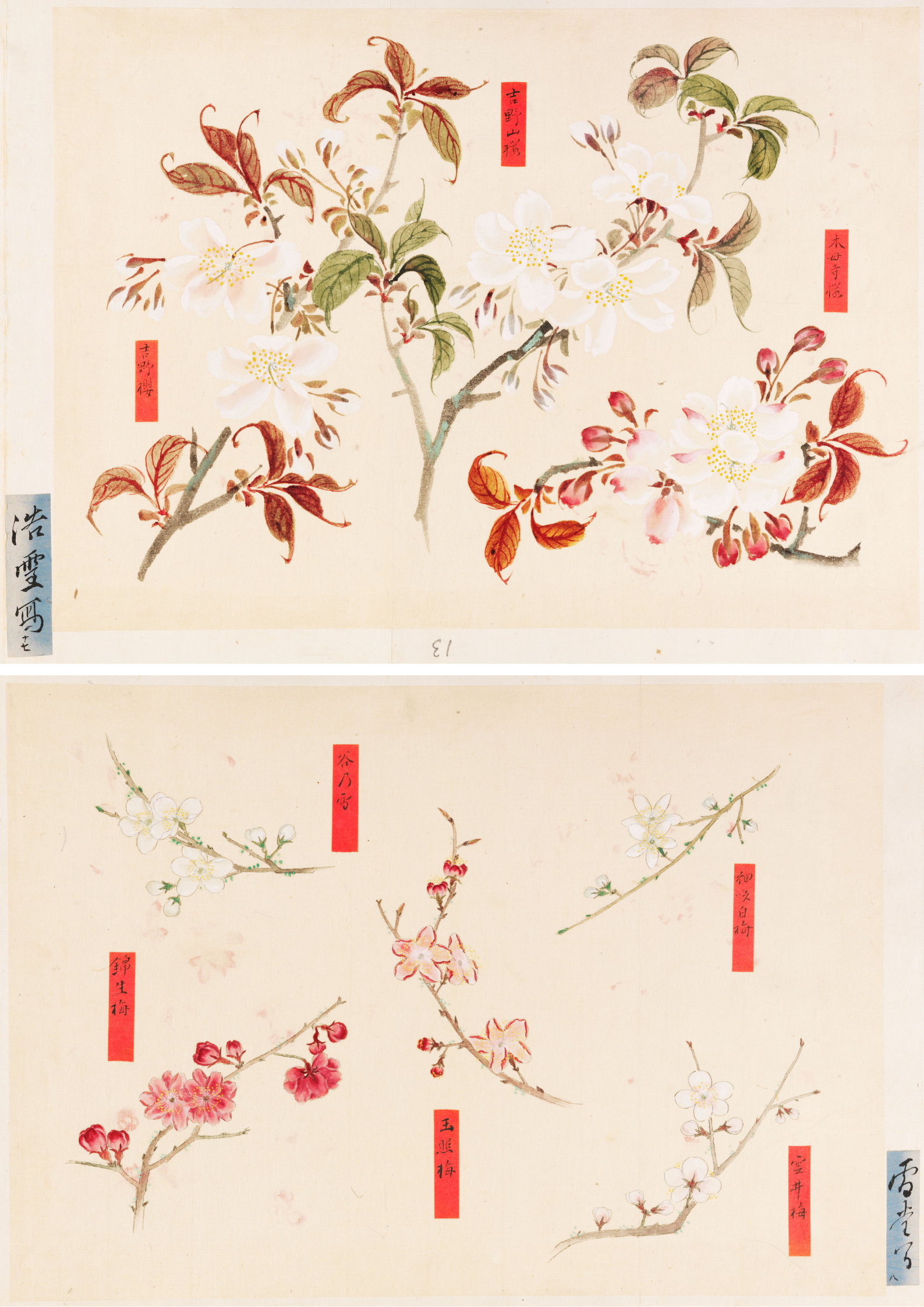
Cherry blossoms (top) and plum blossoms (bottom)
Plum trees are the first to bloom in the new year. In China, plum blossoms have been popular for millennia while in Japan, cherry blossoms are preferred. The easiest way to tell them apart is by checking the petals: cherry blossom petals have split tips; plum blossom petals have rounded tips and are evenly shaped.
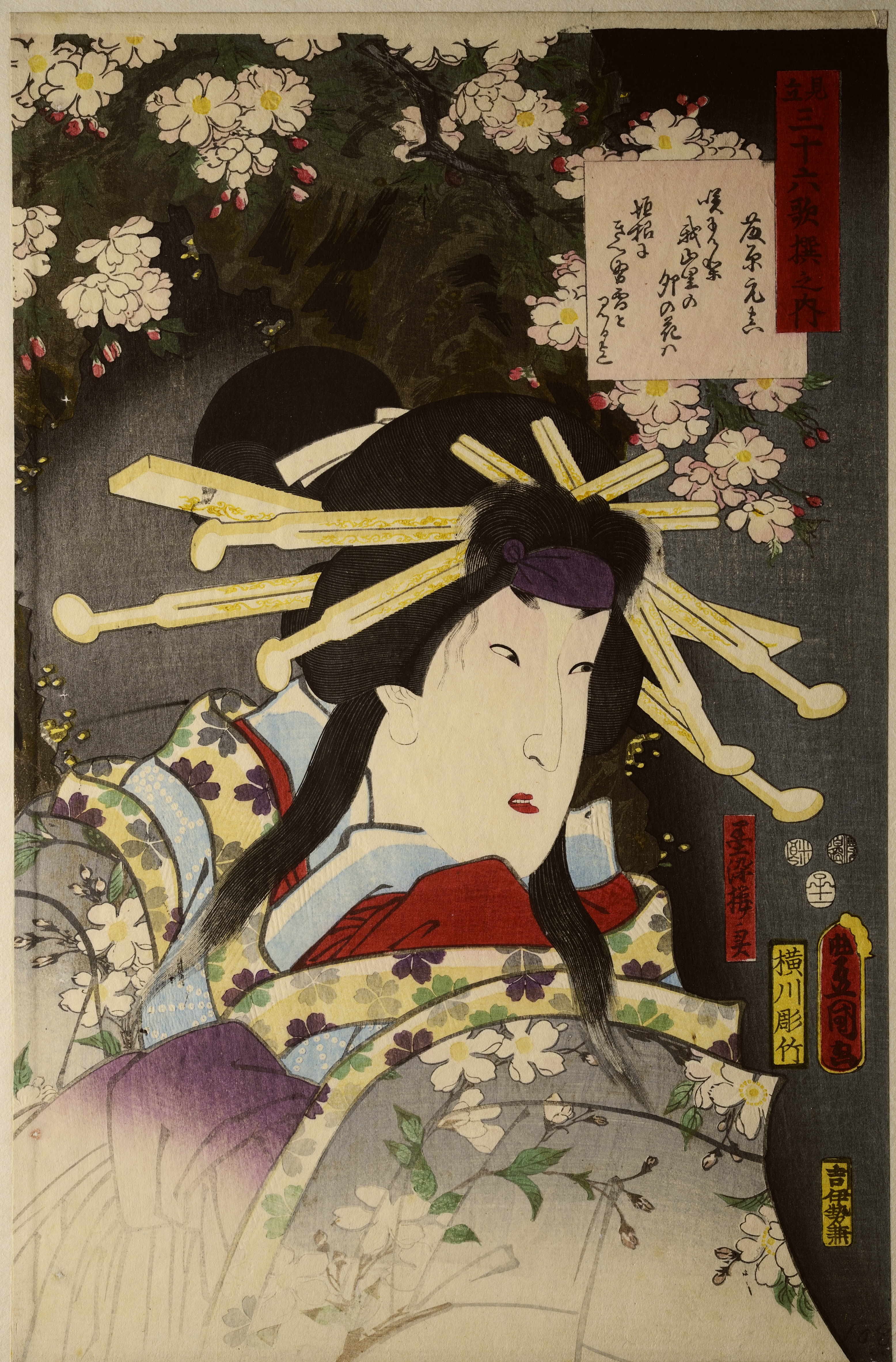
Actor in female role under nightly blossoms
In kabuki theatre, still popular today, all roles are played by men. An actor playing a female role can be identified by the small purple headcloth covering his shaved forelock. Here, Segawa Kikunojō III plays the spirit of the cherry tree. The gradient on the bottom is suggestive of a ghost, emerging from the evening mist.
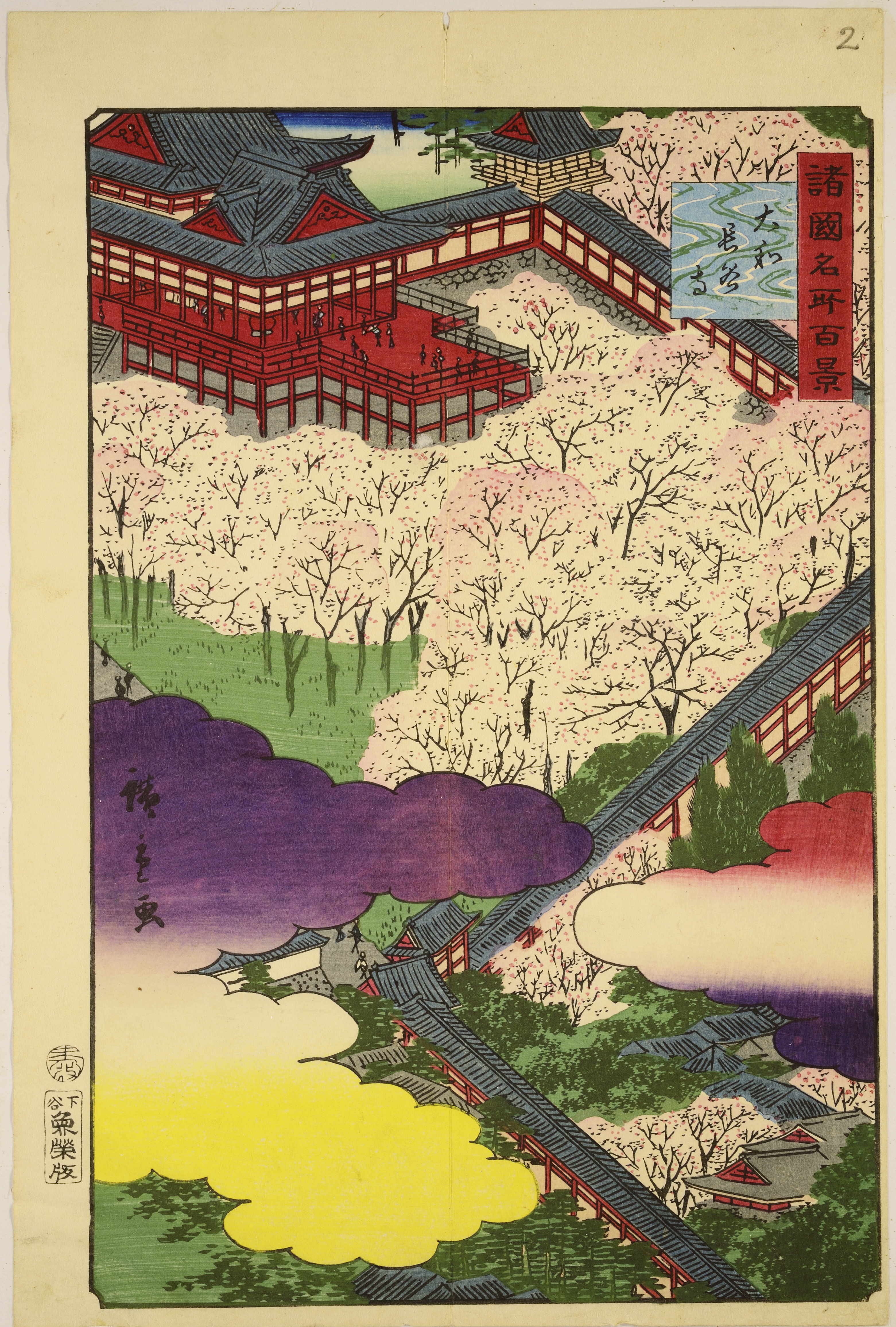
Blossoming cherry trees at Hasedera Temple
A bird’s-eye view of the Hasedera Buddhist Temple, with lots of people about. The covered steps to the main building pass through a sea of cherry blossoms. A breathtaking climb, both in terms of its beauty and the number of steps. The impermanence of the delicate blossoms has a strong symbolical connection with aspects of Buddhism.
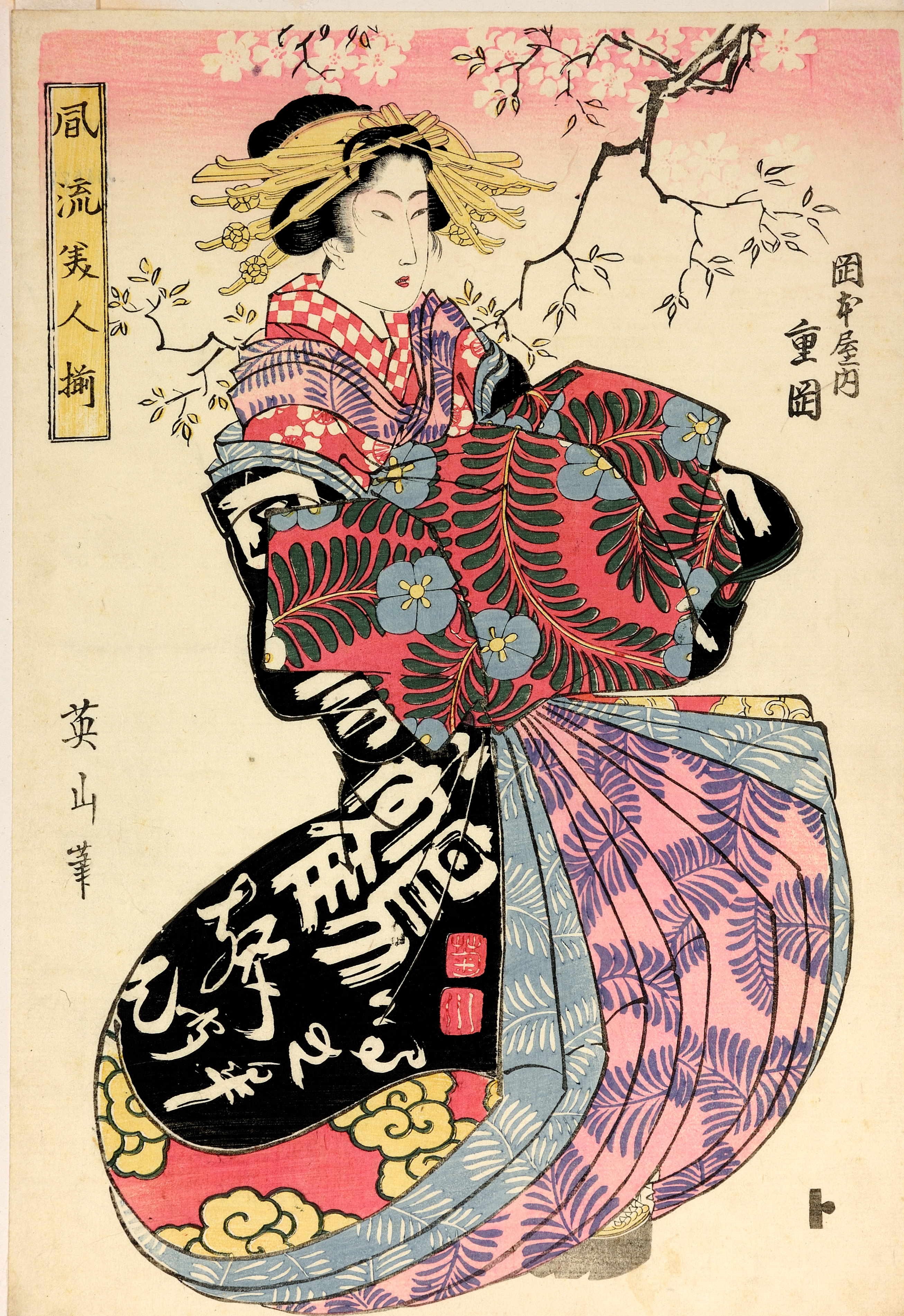
High-ranking prostitute parading under cherry blossoms
This is Shigeoka from the house of Okamotoya. She is featured here in the series ‘Beauties in the latest style’. Young women who lived in or around the official brothel district were known as the ‘Flowers of Edo’ (present-day Tokyo). But neither her many-layered silk kimono nor her many hair ornaments can disguise the fact that hers was a hard existence.
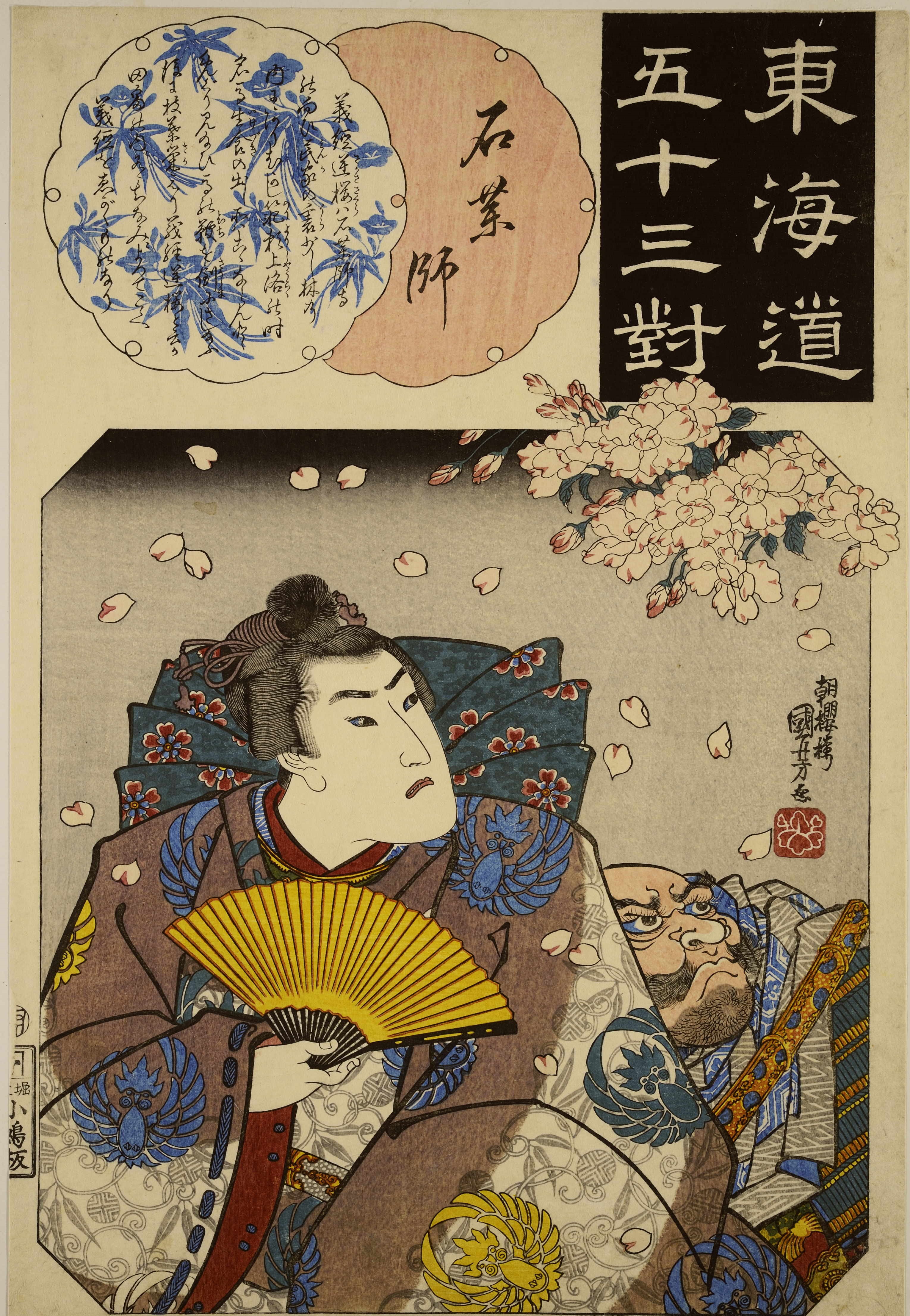
The heroes Yoshitsune and Benkei under falling cherry blossoms
Yoshitsune and Benkei are among the most famous warriors in Japanese history. They died in the wars of the twelfth century. Falling cherry blossoms often symbolise young warriors who died in battle. The cherry tree is said to have been the work of Yoshitsune’s brother Noriyori. Before the battle, he went to pray at a temple and stuck the cherry branch he was using for a horsewhip top-down into the ground. The ‘upside-down cherry tree’, sakasa sakura, was the result.
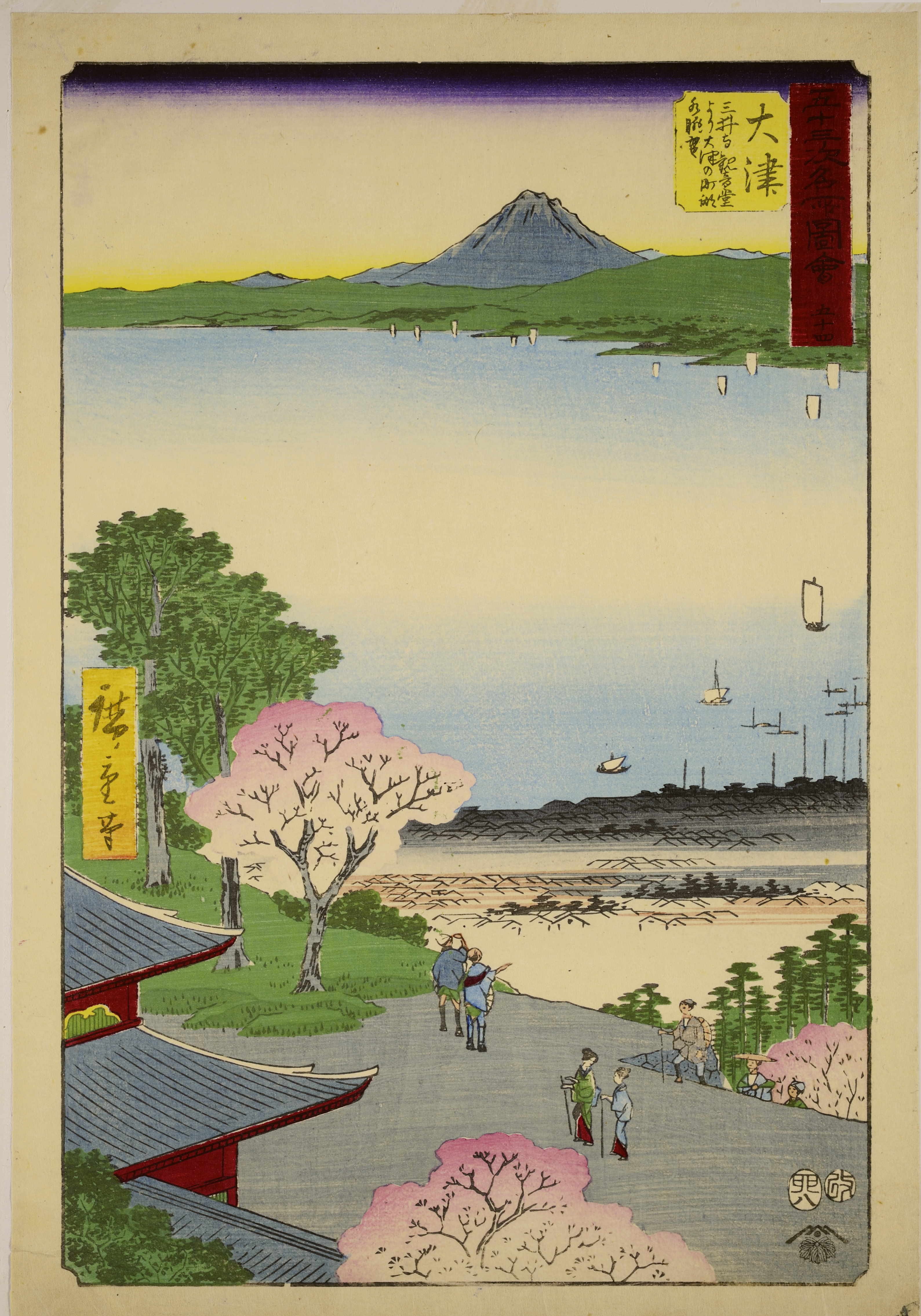
The Miidera Temple at Lake Biwa
Hiroshige drew this bird’s-eye view of Lake Biwa, not far from Kyoto. Cherry trees bloom near the Miidera Temple; parts of the roof are visible on the left. Hiroshige often placed large objects at the front of his compositions to create a stronger sense of depth.